Seven in ten Scottish adults report feeling overwhelmed by stress at some point in any given month, according to Mental Health Foundation Scotland's 2025 annual survey. The figure hasn't budged meaningfully in three years. What has shifted is the clinical thinking around how ordinary people can protect themselves — and the answer keeps coming back to small, consistent daily habits rather than crisis intervention.
This matters particularly now. The cost-of-living squeeze hasn't fully eased — average Edinburgh rents hit £1,380 per month in May 2026, according to property portal Citylets — and anyone who's watched a friend lose sleep over a mortgage decision or a job that pays the bills but drains the soul will recognise how quickly financial anxiety bleeds into psychological exhaustion. Stress rarely arrives as one catastrophic event. It accumulates in layers.
What the science actually says about habit stacking
Researchers at the University of Edinburgh's School of Health in Social Science published findings in March 2026 showing that participants who practised three or more brief daily wellbeing habits — defined as under ten minutes each — reported a 34 percent reduction in self-reported anxiety symptoms over twelve weeks. The habits themselves were unremarkable: a short morning walk, two minutes of focused breathing before lunch, a handwritten list of three specific things noticed that day. No app subscriptions required.
The mechanism, broadly, is about training the nervous system to expect small doses of calm rather than waiting for a holiday or a long weekend to decompress. Clinical psychologists describe this as 'micro-regulation' — interrupting the cortisol cycle before it compounds. The Mindfulness Association, which runs in-person courses from its base on Causewayside in the Southside, has built its eight-week Mindfulness-Based Stress Reduction programme around exactly this logic. Places on the next cohort, starting 14 September 2026, cost £295 and are filling quickly.
Edinburgh's Broughton Street corridor has quietly become something of a hub for this kind of accessible, low-threshold mental wellness provision. The Lauriston Centre near Tollcross runs drop-in wellbeing sessions on Wednesday mornings for £5, mixing breathwork with peer conversation. Yoga Edinburgh, with studios in Stockbridge and Leith Walk, reported a 22 percent increase in attendees for its restorative and yin classes between January and June 2026 — styles that explicitly target nervous-system downregulation rather than physical performance.
Building the habit without burning out on the effort
The frustrating irony of resilience-building is that it demands consistency at precisely the moments when consistency feels hardest. Practitioners suggest attaching new habits to existing anchors. Morning coffee becomes two minutes of slow breathing. The walk from Waverley Station to an office on George Street becomes a phone-free observation exercise. The commute through Meadowbank stops being dead time.
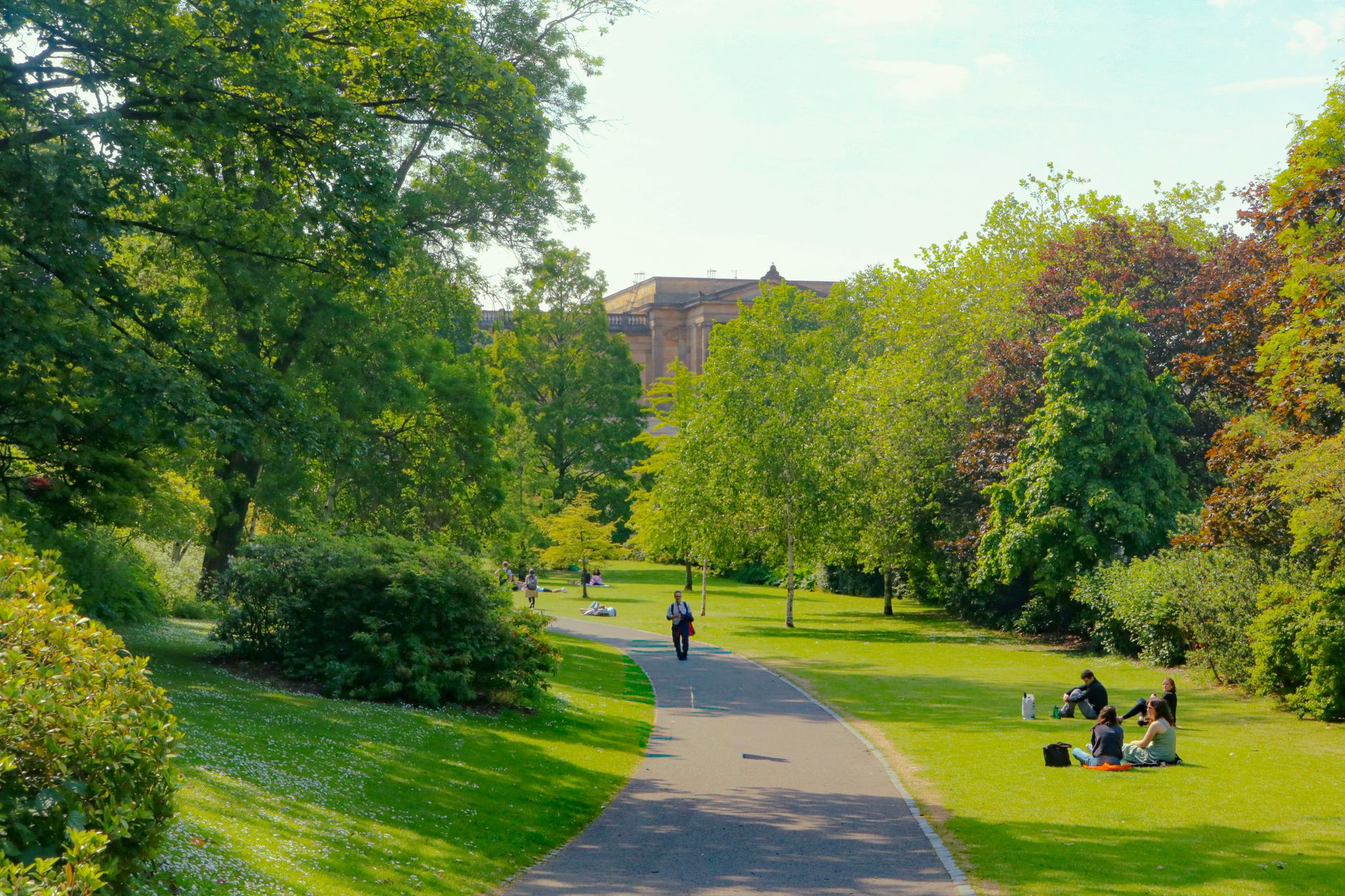
Edinburgh's parks help. The Water of Leith Walkway, stretching nearly 12 miles from Balerno to Leith, is free, accessible year-round and offers what environmental psychologists call 'soft fascination' — the kind of low-demand sensory input that allows the prefrontal cortex to recover from decision fatigue. A 20-minute lunchtime walk there three times a week may not sound transformative. The University of Edinburgh data suggests otherwise.
For those who need more structured support, NHS Lothian's Wellbeing Service offers self-referral — no GP appointment required — for talking therapies including cognitive behavioural therapy, with current waiting times around six to eight weeks for initial assessment. The service can be reached directly through the NHS Lothian website. Charitable organisation Breathing Space runs a free Scottish helpline, 0800 83 85 87, available Monday to Thursday from 6pm to 2am and around the clock on weekends.
Start with one thing. Pick the smallest possible version of it. Do it tomorrow morning before you check your phone. The evidence, at least, is on your side.
Anyone experiencing a mental health crisis should contact their GP, call NHS 24 on 111, or ring Samaritans on 116 123. This article is for general information only — consult a qualified health professional for personal advice.