Wellness
Walking Meditation: How to Turn Your Daily Walk Into Mindfulness
Edinburgh's pavements, parks and canal paths offer some of the best conditions in Britain for a practice that costs nothing and takes no extra time.
4 min read
Wellness
Edinburgh's pavements, parks and canal paths offer some of the best conditions in Britain for a practice that costs nothing and takes no extra time.
4 min read
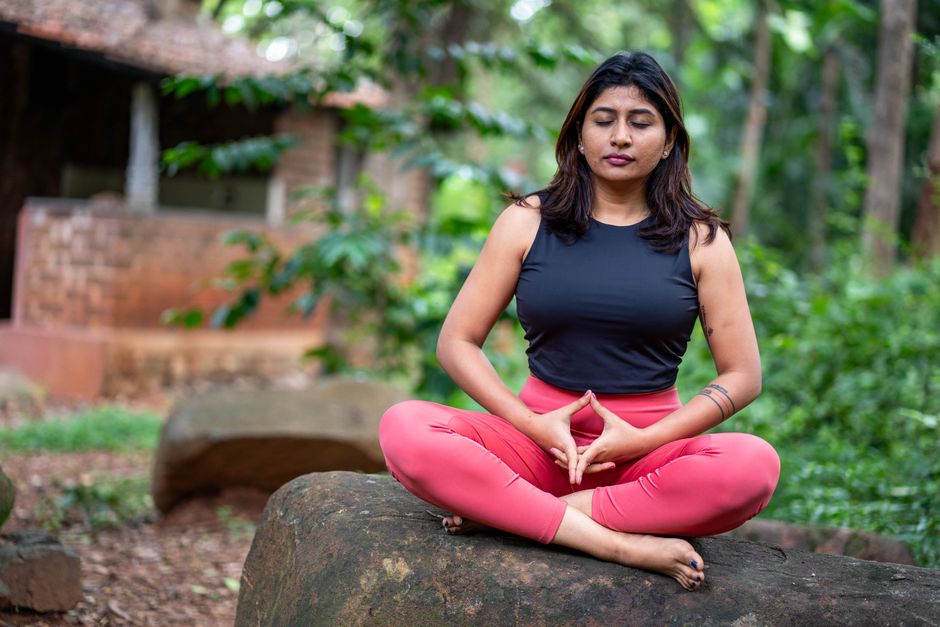
Most Edinburgh residents already walk. The city's steep topography, compact Old Town closes and the near-constant need to get somewhere without paying for a Lothian Bus ticket means the average Edinburgher logs considerable mileage every week. The shift that mindfulness practitioners are now encouraging is a small but specific one: slow down, put the phone away, and let the walk itself become the practice.
Walking meditation has deep roots in Buddhist monastic tradition — the Theravada concept of kinhin involves slow, deliberate movement between sitting sessions — but it has moved firmly into secular wellness culture over the past decade. Interest spiked again this spring. NHS Lothian recorded a 14 percent increase in GP referrals for stress-related conditions between January and April 2026 compared with the same period in 2024, according to figures published by the health board in June. Meanwhile, the cost of a single drop-in yoga or mindfulness class at studios across the city now routinely hits £16 to £22. Walking costs nothing.
The city is, by accident of geography, unusually well suited to this kind of practice. Holyrood Park offers more than five kilometres of circular trail with enough gradient change to demand physical attention — exactly the kind of somatic anchor that mindfulness teachers use to keep the mind from drifting. The Water of Leith Walkway, running 24 kilometres from Balerno through Stockbridge and into Leith, provides a near-continuous green corridor where traffic noise drops away enough to hear your own footfall on packed earth.
The Edinburgh Buddhist Centre on Melville Terrace runs structured walking meditation sessions most Saturday mornings, currently priced at £8 suggested donation. Their introductory six-week Mindfulness in Daily Life course, next cohort starting 13 September 2026, incorporates outdoor movement practice alongside seated work. Separately, the University of Edinburgh's Chaplaincy on The Pleasance hosts informal lunchtime walking groups on Tuesdays, open to the public, that draw on mindfulness-based stress reduction principles developed by Jon Kabat-Zinn at the University of Massachusetts Medical School in the 1970s — a programme whose evidence base now spans more than 10,000 published studies.
Meadowbank and Inverleith Park are both used by local practitioners precisely because their flat, looping paths remove the cognitive overhead of navigation. That matters: one of the core mechanics of walking meditation is redirecting attention away from destination-thinking and toward sensation — the feeling of the sole meeting the ground, the rhythm of breathing, peripheral sounds. Canongate, with its irregular cobblestones, turns out to be a useful advanced setting; the uneven surface forces a level of physical presence that a smooth tarmac path simply does not require.
The technique itself is not complicated, which is part of the point. Choose a route you know well enough that you will not be making decisions about direction every 30 seconds. Set a time rather than a distance goal — 20 minutes works well for beginners. Leave headphones at home. Start by walking at roughly 70 percent of your normal pace. Direct attention to the physical sensation at the base of each foot as it makes contact with the ground. When attention wanders — and it will, immediately and repeatedly — simply return it to that sensation without judgment. That return, teachers consistently note, is the practice. The wandering is not failure.
Breathe through the nose where possible, and notice whether your breath changes on an incline. The climb up from Canonmills to the top of Broughton Street, for instance, creates an unavoidable moment of physical effort that can serve as a natural reset point in longer city walks.
For those wanting a more structured entry point than a solitary first attempt, Edinburgh's Breathing Space charity — which runs its free mental health support line on 0800 83 85 87 — publishes a short guided audio walk on its website, specifically recorded with Edinburgh's Meadows as the setting. The track runs to 18 minutes and was developed in partnership with the Mindfulness Association, which is based in Aberfeldy and trains practitioners across Scotland. That combination of free access and local specificity makes it a reasonable starting point before committing to any paid course.
About this article
Published by The Daily Edinburgh
Spread the word
Daily brief
Free, in your inbox before 7am. Weekdays.
The Daily Network — local news across Australia